Monday, June 4, 2012

capstone project- marble sorting

Organize it!: Title your post and organize it by section in a logical manner.

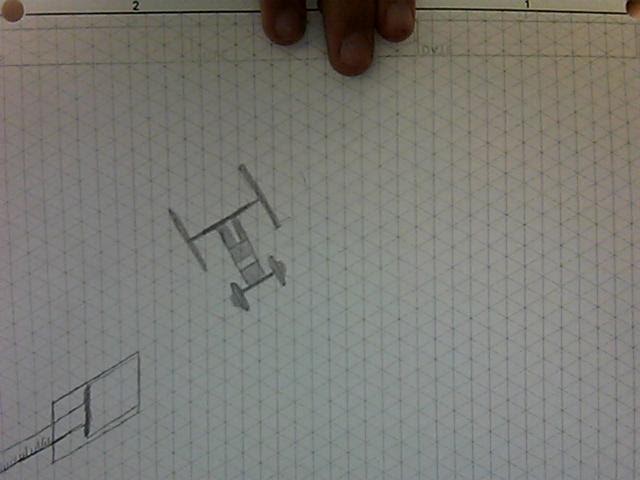
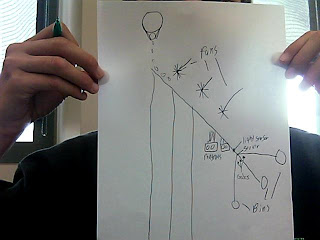
Brainstorm!: Provide at least four of your team’s brainstorming ideas for the design solution. This should include brainstorming sketches. Each sketch should include labels and descriptions for communication.

MACHINE 1


MACHINE 2


MACHINE 3


MACHINE 4


CAD!:
Use our Inventor CAD software to model a prototype or your final design. Post screenshots of your model.

Enter the Matrix: Evaluate your solution ideas (4 minimum) using a decision matrix. Determine the best solution to the problem. Explain your rating system and share insight on why you rated your solutions as you did.


Design Solution( Machine 3 design): Create a detailed pictorial sketch or use 3D modeling software to document the best solution, based upon your team’s decision matrix. Your sketch or 3D model should include a rationale for the design selected as the final design solution. Each sketch should include labels and descriptions for communication.

"I've Made a Few Special Modifications...": Document modifications made to your design during implementation. Explain the reason for the modifications and describe how the new design solution will solve the problem. "Story" is the split between expectation and outcome. Tell us a story regarding what your plan was and how it actually came out! Use photos and sketches to call out three changes. (Nerd points if you know where the quote for this Achievement title comes from)
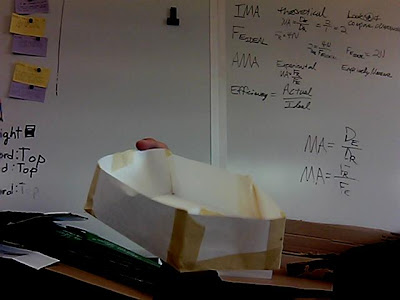
One of our main modifications was putin g magnets at the end of the ramp in order to get the metal marble with the magnet instead of the color sensor.
(Han Solo.)
Final Implementation: This section will showcase your final hardware and software solution. Include photos of your hardware and program. Call out atleast three key features of your design that were significant to its performance. Report how your solution performed in the challenge.

Final Implementation - Video!: Embed a video that showcases your solution in action!

Reflection: Adress the four feedback types that we use in our courses (+, -, ?, !). Solicit feedback from someone outside of your team as well.
Some questions to consider in this section: How well did you accomplish your objectives? What would your team do differently with your design solution and why? Do the results fulfill the problem statement? Provide a brief explanation of what you learned, the challenges of working in a design team, and the purpose of the design problem.
+: It is compact, and we probably used the least amount of parts. It has a simple design.
- : might take a long time to sort, needs to much programing.
? : Could making it bigger make it easier, could using pistons be easier than motors.
! : Make it bigger!!, use pistons for the sorting(faster).

Reference: Post a hotlink to material you referenced on the internet. Explain why this information is significant to your project.


Product Achievements:

Marble Sorting (some achievments scored multiple times):
Sort one marble (x1)
Sort two marbles (x1)
Sort three marbles (x1)
Sort four marbles (x1)
Sort four marbles (x2)
Sort five marbles (x1)
Sort five marbles (x2)
Sort five marbles (x3)


Sorting Speed (15 marbels total: 3ea of 5 types):
Process 15 marbles in less than 2:00 minutes.
Process 15 marbles in less than 1:45 minutes.
Process 15 marbles in less than 1:30 minutes.
Process 15 marbles in less than 1:15 minutes.
Process 15 marbles in less than 1:00 minute.
Process 15 marbles in less than 45 seconds.
Process 15 marbles in less than 30 seconds.


Marble Delivery (may use non-fischertechnik materials to create a "hopper" to drop marbles into for "Drop" achievements):
Drop marbles from 6" above machine
Drop marbles from 1' above machine
Drop marbles from 2' above machine
Drop marbles from 6' above machine


Systems (not including motor or piston used to charge your pressure vessel):
Use one piston
Use two pistons
Use pneumatics but less than three pistons
Use at least one motor

Friday, March 9, 2012

Soccer goal


For our goal to work, we put a set of lights attached to the left post of the goal, and a set of photoresistors on the other side so that when the ball went through the goal the photoresistor would detect the ball because of the lack of light. 


Tuesday, February 28, 2012

Money Ball

1) What was the “Moneyball”approach that Billy Beane and Peter Brandt applied to the Oakland Athletics 2002 season? Was it an “art” or a “science”? What single statistic did they boil their value consideration down to? (In class research/discussion)
The moneyball approach was basicaly to get players with a low value but high quantity. I think that it is both an art and a science because it is the science of geting all the data and the statistics, but also the art of applying them to the game of baseball. The single statistic that everything boiled down to was on base percentage.
2) What is the equation used to calculate OBP? (In class research/discussion)
OBP = \frac{H+BB+HBP}{AB+BB+HBP+SF}
  • H- HITS
  • BB- WALKS
  • HBP- TIMES HIT BY PITCH
  • AB- AT BATS
  • SF- SACRIFICE FLIES
3) What is design? (In class research/discussion)

4) Describe 3 situations where movie characters (intentionally or not) applied a step from the PLTW 12 Step Design Process. Explain both the (a) situation as well as (b) how the step is relevant:
1 - Bean tries to define the problem while the other scouts try to skip onyo brainstorming.
2 - Higher Peter Brandt could be the refining step.
3 - Bean and Brandt put the team to the test.
5) What is “Leadership”? List the three aspects of leadership that we come up with in class. (In class research/discussion)
1 - Direction
2 -Alignment
3 - Commitment
6) Describe 3 circumstances from the story where a character exercised effective leadership:
1 - Fiered head scout
2 - Forced coach to play with money ball tactics
3 -Cut the younger Giambi.
7) According to the movie, what was the A’s record at the start of their winning streak? _68_ : _51__
8) What does this ratio simplify to (roughly)? __1.5_ : 1
9) How long was the A’s record setting winning streak? _20__ games won.
10) Given the A’s win/loss ratio at the start of the streak (listed two questions above), what are the odds of winning 20 games in a row? Run the numbers. (In class research/discussion)
.0037%
11) Based on your calculation, do you think the A’s got lucky or was there something to the Moneyball approach?
I think that it was definetly the monryball tactic.
12) Did Billy Beane strictly apply the “science” of Moneyball to his management approach? Was there an “art” to his efforts as well? Describe a circumstance where he broke from the Moneyball approach to make a positive change for the team.
I think that it is mostly the science, but Bean also applied some art to his efforts.One example when Bean broke his approach was when he fiered the younger Giambi.
Bonus Question (look into this if you’ve finished ahead of the class):
Money Ball was originally a book. What author wrote the book? What other books has this author written? Is there a theme to his writing?
  • Author: Michael Lewis
  • Other Books: Liar's pocket, the new thing, etc...
  • Theme: Dont give up on your vision
It's "Oscar Season", will Moneyball win the Oscar for any of the categories it's up for?
NO

Friday, February 17, 2012

Open and closed loop 3.1.6

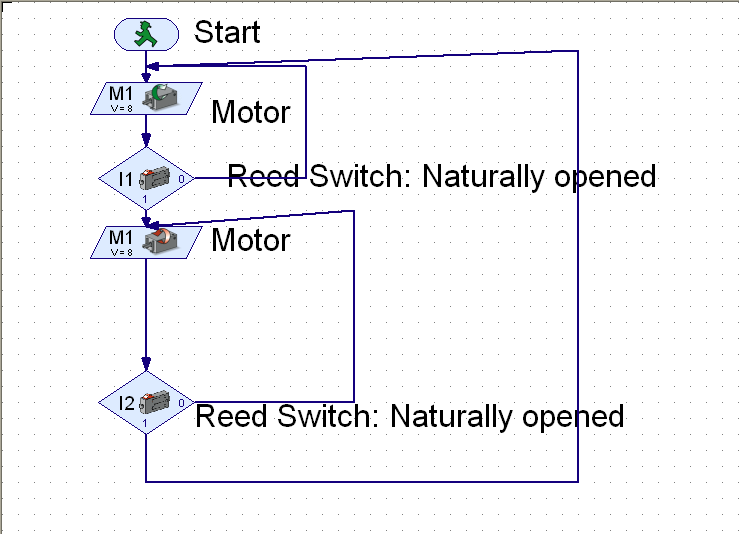
1.We built a support system and track.
2.We added motor and gearbox.
3.


4.No, it did not end in the middle because it traveled a greater distance when going to the left(forward).
5.It is an open loop.
6.At the end of the track.
7.It would be inefficient because it runs more one way than the other.

Tuesday, February 14, 2012

Variable functions

1-13

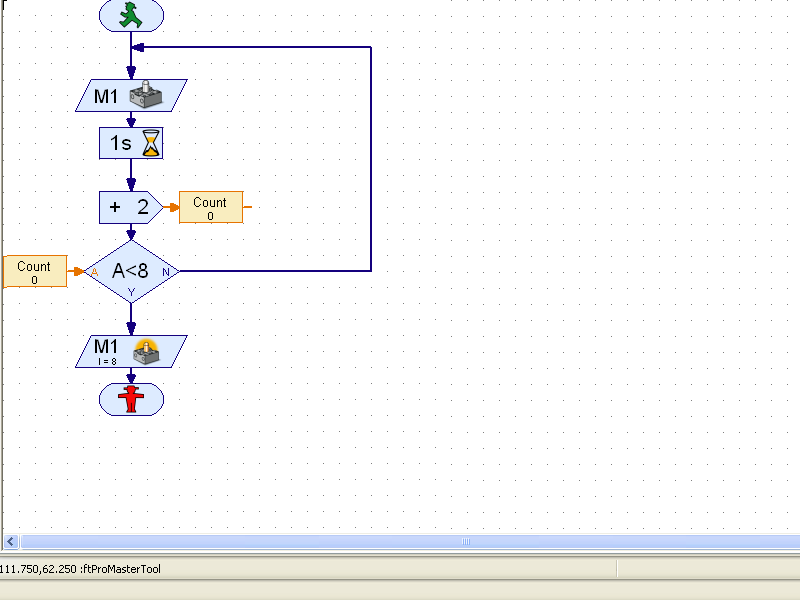
14. The light was on for about 1 second.(1 to 2)

15.


16.You just change the number from 2 to any other number.

17.They need to keep track of how many things they manufacture.

Friday, February 10, 2012

Branch Functions

1. It will continue in zero mode.


2.


3. The lamp will remain off

6.


7-11


Conclusion
1. It is important to add branches because it allows the program to act depending on your desicions.

2.Normally open: a light switch, or a doorbell

3.Normally closed: car or house alarm

Monday, February 6, 2012

Basic Programing

Conclussion question:
1.what is the best way to make sure that all of your devices are in correct ports of the interface and have been wiered corectly?
A: You can make sure by testing all of your devices before doing the actuall programing.

2. Explain the importance of labeling block functions within a flowchart
A: The importance of labeling blocks in a flowchart is that it helps you identify the start and end, as well as other functions in a flowchart.

Tuesday, January 31, 2012

Monday, January 9, 2012

Smartest machine on earth

What is "machine learning"?
The ability for a machine to learn from it's mistakes. AI.
How did the IBM team employ that concept in the development of Watson's AI? What advantage did that provide over previous attempts at "intelligence"?
This "machine learning" gives Watson a real advantage over other machines because it can learn from it's mistakes. Ex: when Watson didn't get a context clue in a jeopardy question, and that caused him to get it wrong; in the following question he was able to analyze the question and get it right.
I've often mentioned the term "Empirical Scepticism". What does that mean? How does that relate to the concept of Machine Learning? How does this relate to your life?
Empirical Scepticism means to suspend judgement and to embrace doubt in order to work harder for a better result. This relates to machine learning because they saw doubt in Watson, but they worked harder to make him better.

car of the future

So what is the car of the future? In other words, what appears to be the most promising technology explored by Click and Clack? Justify your response.
A car of the future is a car that is fuel efficient, light weight, hydrogen powered, and overall it also needs to be safe.


What fields of study/work would support the development of the car of the future. Describe two different ones.
  • Fuel efficiency
  • Safety
  • Design

Tuesday, January 3, 2012

Ground Zero

What different "trades" (types of construction work) are featured in this video? Name at least three.
  • Architecture
  • Pipe work
  • Concrete work
  • Electrical

What aspect of the project is most interesting to you? Why is that?

The architecture was the most intresting aspect to me beacause they were able to find a way to build a giant tower that looks nice and modern, and at the same time it is very safe.

Thursday, November 3, 2011

Power poin presentations


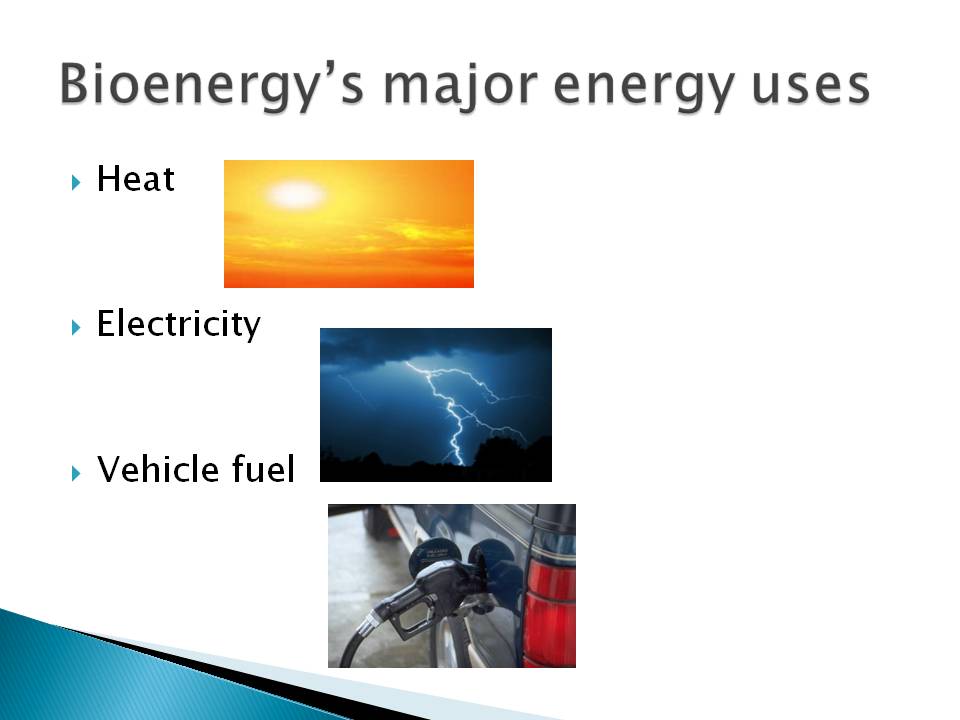
Bioenergy presentation


Wind energy presentation
1. Describe one thing that surprised you about the energy source that you researched and presented.
One thing that suprised me abput bioenergy is that it is renewable, and that it is extracted from natural resources.


2. Describe one thing that surprised you about an energy source that another team presented.
One thing that greatly suprised me was that coal is used in very large scale, but it is acctually only 30% effective.
3. Describe and defend what you believe to be the most important technological need regarding energy.
I think that one of the most useful energy sources is wind energy. Because it is a clean and renewable source that is everywhere.

Tuesday, November 1, 2011

The deep dive 2

1. “From the buildings in which we live and work, to the cars we drive, or the knives and forks with which we eat, everything we use was designed to create some sort of marriage between Form and Function.”


2. The folks at IDEO state that they are not experts in any given area. But, they do claim to be experts on the __Procces of how to define stuff___, which they apply to the innovation of consumer products.
3. After the team of designers is brought together, told the problem, and informed they have five days to “pull it off,” what phase of the design process do they immediately engage in?
  • Brainstorm
  • give useful comments.
  • Come up with ideas

4. Give two examples of what the team members did during this phase.

a.Give info and facts about the problem.
b.Brainstorm, and work as a team(teamwork)


5. List five rules-of-thumb that IDEO employees follow when they share ideas during the brainstorming phase:

a.One conversation at the time
b.Stay focused on topic
c.Encourage wild ideas
d.Defer judgement
e.Build on the ideas of others


6. Why should wild (and sometimes crazy) ideas be entertained during the brainstorming phase?
  •  Because out of wild ideas, they come up with brilliant ideas.
  • And if there were only normal ideas, they wouldn't be able to do something cool or extraordinary.

7. After the brainstorming phase was over, the team narrowed down the hundreds of ideas by _____voting_____ for those ideas that were not only “cool” but also _buildable_____ in a short period of time.
What phase of the design process is this called?
Enlightenment trial and error.

8. IDEO believes that the ideas and efforts of a ___team___ will always be more successful than the planning of a lone genius.

9. Once the ideas were narrowed down and divided into categories, the group was split into four smaller teams. What phase(s) of the design process was each of these groups responsible for?
  • Shopping

  • Safety

  • Checkout

  • Finding stuff you need

  • 10. The leaders at IDEO believe that  _a playful __ behavior and a ___fun____ environment are two important reasons why their employees are able to think quickly and creatively to produce innovative results.

    11. Sometimes, people come up with great solutions that work by trying their ideas first, and asking for _____opinion____________ later.

    12. Design is often a process of going too far and having to take a few steps back. What phase of the design process would the critique of the four mock-ups come under?
    re-finding and communicating results

    13. Upon critique of the four teams’ models, it was obvious that none of the teams had developed an optimum solution. However, the people at IDEO believe that it is important to ____fail_________ often in order to ___succed__________ sooner.

    14. What percentage of the entire week’s time did it take to fabricate the final prototype?
    1 day - 20%


    15. Instead of showering his design team with a tremendous amount of praise, what did the boss require his employees to do with their new design?
    Improve on there design


    16. Of all the things that we are surrounded by every day, what has not been placed through the design process?
    • human body
    • nature
    Conclusion

    1. What did you find to be the most impressive part of the team’s effort?
  •  Everyone worked as a team an had fun while doing it.

  • No one criticized ideas.

  • The final product looked cool was effective and very successfully.


  • 2. What advantages are there to having a design team with members that have non-engineering backgrounds?
  • Crazier ideas.

  • Ideas engineer wouldn't come up with.

  • Provide more info. from each person from a different field


  • 3. There was a point in the process where a self-appointed group of adults stepped up, stopped the ideas, and redirected the group to break up into teams. Why was this done?
  • So they could get more ideas in a faster range of time.


  • 4. At the end of the video, Dave Kelly states, “Look around. The only things that are not designed are the things we find in nature.” Can you think of anything that would contradict this statement?
  • No, because everything is done by thinking, even minor things. Only nature is not engineered.
  • pumpkin design

    This was the first pumpkin I made.

    Second and improved pumpkin

    Thursday, October 20, 2011

    Cardboard canoe challange

    At the end of the race, I earned: 10 achivements 
    • Sketch Ideas - Draw 3 different sketches for possible designs. Label at least 3 key features for each sketch. Describe the feature's functionality so a viewer understands why the called out feature is important.


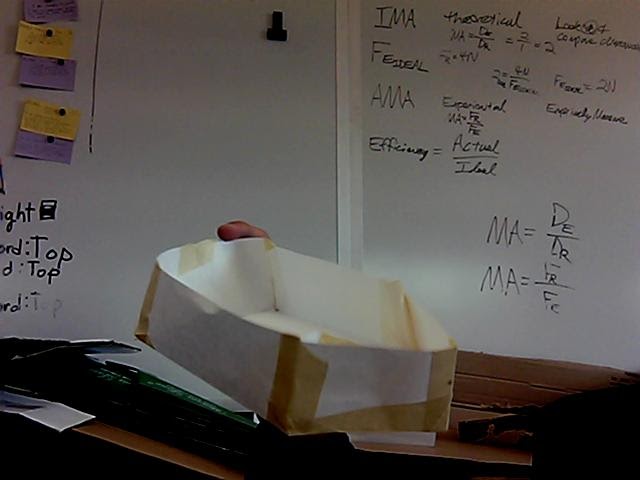
    Boat #1: Has a stable design. Not a completely flat bottom(almost like a v shape but not that much) and has a big base that can fit one to three persons.


    Boat #3: Tall walls so water wont come in. Can cut thru water.Stable design.


    • Prototype Ideas - Craft physical prototypes (models) of each of your three sketches. Use a note card or post it note to call out at least one key feature on each model. Post the images to your blog and describe the key feature that you've pointed out on each.


    Has a big base, but not completely flat, this boat has very good Resistance, and can carry up to four persons.


    Has large paddles: Helps gains speed and helps balance canoe.


    Has good buoyancy: has a flat and stable bottom that can fit up to two people.
    • Select an Approach - Generate feedback (+, change, ?, !) and make a decision matrix regarding your sketches/prototypes. Specify the approach you've chosen and justify your selection.

    Design 1(Ruy):
    +: It floats well on water
    -: It does not have anything to break water Resistance
    ?: Will it go fast?
    !: Put paddles

    Design 2(Michael):
    +: Its stable
    -: To big
    ?: Will it be effective in the race?
    !: Add paddles

    Design 3(Armando\Stanley):
    +: It can break thru water
    -: Not as stable as others
    ?: Will it sink?
    !: Add side support to help with the buoyancy

    • Use a decision matrix to compare your 3 design approaches (we'll talk about decision matrices in class)

    Best 10 worst 1


    The design that we actually used for the race was the first design.
    Design 1(Ruy):
    +: It floats well on water, and is very buoyant(could hold up to 4 persons)
    -: It had a few leaks that got water onto the boat, and made it heavier.( But it never sank) 
    ?: If we would have had more "horsepower" would we have won?
    !: Put paddles, and perhaps put a bigger piece of cardboard (not attached) under it to give it a good start. And Put more duct tape on the corners and edges.


    Achievements

    Design Achievements
    • Define the Problem and Brainstorm Solutions - State the problem you are designing a solution for. List at least 20 ideas you have regarding your solution.
    The problem was that we had to design, and build the fastest and most resistant boat we could by using duct tape and cardboard,
    Ideas:
    1. Make it big
    2. Put paddles
    3. Stable walls
    4. A lot of duct tape
    5. Duct tape rope
    6. Not straight on the bottom
    7. Stable base
    8. Equal size walls
    9. Make it float
    10. Set as much buoyancy as possible
    11. Dynamic
    12. Mermaid at the side
    13. Artistic design
    14. Big stiff cardboard cylinders to hold walls
    15. Put cylinders on front and back
    16. Use cylinders to hold front part and back part of boat as well
    17. Seal corners with  a lot of duct tape
    18. American flag on top
    19. Stable walls with duct tape
    20. Get the stiffest pieces of cardboard possible
     
    • Big Brain ?


    • Criteria & Constraints - List or reference the specified Criteria and Constraints you're designing for. List at least one implied criteria. List at least three implied contsraints.

    • Criteria implied: Your boat must float at least one student thru the course of the competition
    • Constrains implied:
      • You may only use Cardboard and Duct Tape for this event.
      • Each boat must have a minimum of a 3" tall "sidewall"
      • All exposed cardboard must be covered in duct tape (this will reduce cardboard disintegration in the pool).
    Build Achievements
    • Build It! - Build your watercraft. Document it with a presentable photo.


    Test Achievements
    • The Fastest - Awarded to the first team to reach the far side (25yds)
    We were not the fastest, but we got second place on the race.
    • The Farthest - Awarded to the team that can travel the furthest (laps)
    We didn't go the furthest, but we could have gone more laps.
    • The Longest - Awarded to the team with the watercraft that floats the longest (multiple teams may be awarded this achievement if multiple boats remain afloat at the end of our competition period).
    Every team got this achievement.
    • Balance Master - Awarded if you can have at least one person stand for 5 seconds in the boat (you must conduct this away from the edge of the pool so that non one falls over and hits their head)
    I did achieve this, i was able to stand in it for 10 seconds.
    • Videographer - Take video of the challenge and post to your blog.

    Thursday, October 6, 2011

    Emergency supply list

    Emergency supplies kit

    Top of the list items:
    1. Water
    2. Caned food
    3. First aid kit
    4. Batteries
    5. Flash lights
    6. Radio
    7. Money
    8. Blankets
    9. Pillows
    Other helpfull items:
    1. A car(if possible)
    2. Clothes
    3. Flare gun
    4. I-pod
    5. Shoes
    6. Swiss-armyKnife
    7. Smart phone


    low Importance:
    1. 2 way radio
    2. Mega phone
    3. Duct tape
    4. Head phones

     
    +: Added water to list
    -: Did not add maps
    ?: Where to go(GPS)
    !: Life raft in case of floods

    Tuesday, September 27, 2011

    Mousetrap race cars

    Achievements (by stage):
    I gained 15/15 achievements in this event

    Design:"Brainiac" - Brainstorm solutions for your design. Generate a list of at least 10 ideas/concepts.
    • Small car
    • Add ruler to mouse trap
    • stabilizers on wheel
    • Made wheels different sizes
    • Big rubber wheels at the front
    • Put an extra black block in between wheel sets
    • put wheels on the end of each Axel instead of middle.
    • Used mouse trap as launching device, not as an an engine.
    • Small wheels in the middle of the Axel, so they wouldn't overlap with other set of wheels.
    • Launch it at the middle of the ruler

    "Visualize It!" - Create a sketch of a design and label key features.


    Build:"Build It" - Build your design. Document it with a photo.


    "The Price of Glory" - If each part you use costs $1, generate a total cost for your build (This info will be used to generate "cost" data to add a pricing element to the game next year).

    • Wheels (4)= 4$
    • Axles (2)= 2$
    • Black box (2)= 2$
    • Ruler (1)= 1$
    • Total =9$

    "Competitor" - Compete in the 2nd Annual Mousetrap Race car Challenge.
    Yes, i entered my car into the race.

    "Long Distance Winner!" - Travel the furthest in the race.
    Yes, we won 1st place and went 20 tiles long
    "Going the Mile!" - Travel the furthest or second furthest in the race.
    Yes, we won 1st place and went 20 tiles long

    "Led Foot" - Be the team with the fastest time covering the first 24" of the track.
    Yes, we had an acceleration fster than any of the other teams, we got .33 seconds to the 24" mark.

    "Heavy Foot" - Be the team with the fastest or second fastest time to cover the first 24" of the track.
    Yes, we had an acceleration fster than any of the other teams, we got .33 seconds to the 24" mark.
    "Feedback" - Collect feedback (at least one each of +, change, ? and !) from yourself or your classmates.
    +:  Very light car
    ?:  Four big wheels, or four small wheels
    !:  Car had good in-flight movement
    change: On board engine

    Iterate:"Re-work" - Change your build based on your experience with the race/feedback you collected. Document any changes.
    My design had two big wheels, and two small wheels, but if I could do it again, I would put all big or small wheels.


    "Game Changer" - Develop a new rule or change to the game that you feel would make the event better. Explain your concept.
    Make car at most 15 parts

    "Name it" - Invent a name for an achievement that you think is better than what we have currently.
    "Build it small"

    Clean Up:"Leave It Cleaner Than You Found It" - Did you leave your workspace cleaner than you found it? Explain.
    Yes, we cleaned up after ourselfs, and laso others.

    Reflection:
    "Design/Build" - What is a "Design/Build" process? How did your experience with this challenge relate to that? Why might you experience this in a career related to technical innovation?
    • The design/build procces is generaly when you did what you thought you were going to design, but then built something different.
    • We can realate to this process because we had a completely different design compared to what we acctualy built.
    • You can experiance it when you are creating something, abd you come up with a better idea, and so you change it.